Tronxy Ultrabot Mini Reviews: See Why 0 Shoppers Rated It 0 Stars!
We gathered 0 reviews of the Tronxy Ultrabot Mini 3d printer to answer one thing: Does it live up to its 0/5 score?
 Supermod
 Moderator
 Recaptor
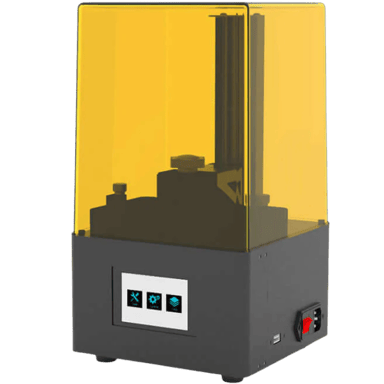
Tronxy Ultrabot Mini Review: A Compact MSLA 3D Printer For Beginners And Hobbyists
The Tronxy Ultrabot Mini occupies an interesting space in the 3D printing world as a consumer-focused MSLA printer designed primarily for beginners and intermediates. Released in 2021, this kit-style printer is tailored for users interested in miniatures, jewelry, and even dental applications. Based on its engineering data, it offers a blend of modest build volume, balanced power consumption, and beginner-friendly features that make it stand out in the entry-level resin printing segment. Does it really live up to its numbers? Let's dive into its specifications and analyze how they translate to user experience.
Detailed Specs & Features
On paper, the Ultrabot Mini presents a Power Supply Voltage range of 110-220 volts, allowing versatility for different regional requirements, paired with a power consumption of only 60 watts during operation and 10 watts when idle. This indicates energy efficiency appropriate for smaller workspace setups. The printer employs a MSLA printing technology with a build volume of 73.7 cubic inches (calculated from 4.72 inches width by 2.56 inches depth and 6.1 inches height), well-suited for detailed small parts.
Its 5.5-inch touchscreen with a sharp 2560x1440p resolution offers intuitive control, although it lacks remote monitoring capabilities. The device supports common resin types like standard, plant-based, ABS-like, dental, and jewelry resins that cure at a wavelength of 405 nm, highlighting its versatility within specialized sectors.
While the printer requires no assembly, contradicting some kit-style assumptions, it misses upgrade options and automatic features such as auto-bed leveling and resin cartridge systems. It functions well within a typical room environment, given its operating temperature of 68-86°F and humidity tolerance of 20-80%. Such specs ensure reliable performance in household settings.
Moreover, the 1-year warranty underpins a basic manufacturer commitment, although spare parts are available to maintain the printer, supporting its longevity despite some maintenance requiring manual lubrication.
User Experience & Performance (Based On Specs)
Design & Build
The Ultrabot Mini's compact frame measures only 5.5 inches in width, 7.87 inches in depth, and 13.19 inches in height, weighing under 10 pounds. This slim profile minimizes the printer's footprint, demanding just 0.43 cubic feet of space. A closed enclosure design enhances safety by protecting resin fumes, although it lacks both enclosure lighting and camera monitoring. The manual bed leveling and metal build plate add a tactile control element valued by many hobbyists, despite the absence of automatic calibration. The touchscreen is a notable user-friendly addition that eases navigation through print jobs with a responsive interface.
Performance
Performance-wise, this printer is capped at an official max print speed of 50 mm/hr, but measured effective speeds hover around 30 mm/hr. Taking around 60 minutes to print a Benchy model indicates moderate speed compared to market leaders, but is consistent with its print accuracy rated at 47 microns. Print success rates of 90% showcase reliability for beginners, despite lacking fault-detection features and print recovery. Operating noise levels peak at 45 dB during work, which is reasonably low and should be comfortable in home offices or classrooms.
Materials & Compatibility
Compatibility with both resin and filament (PLA, ABS, PETG) is somewhat confusing, given its MSLA technology focus, but highlights third-party material support for resins such as standard or dental types. However, it does not support multi-material printing or any auto-loading functionality, placing the user in full control of resin handling. The 250 ml resin tank matches the small build volume and encourages wearing safety precautions due to the lack of resin spill protection or air filtration.
Extra Features
The printer misses many professional high-end features like remote monitoring, cloud support, or firmware auto-updates. Nevertheless, its inclusion of a firmware update option and compatibility with popular slicers such as CHITUBOX and LycheeSlicer ease setup and customization. The absence of emergency stop buttons or child lock modes underscores the need for user vigilance, particularly in educational environments.
Pros & Cons
Pros
- Compact, Lightweight Design Ideal for Desktop or Small Workspace
- High-Resolution 5.5-Inch Touchscreen With Sharp 2560x1440p Display
- Supports Multiple Specialized Resin Types, Including Dental And Jewelry
- Energy Efficient Power Consumption With Versatile Voltage Support
Cons
- Lacks Auto-Bed Leveling, Resin Cartridge, and Advanced Monitoring Features
- No Remote Firmware Updates or Print Recovery Can Disrupt Workflow
- Limited Print Volume And Moderate Print Speed For Larger or Complex Projects
- Absence of Air Filtration or Child Lock May Be Concerning in Shared Spaces
Price & Value for Money
Priced at $230 at Tronxy's official store, the Ultrabot Mini delivers a solid entry-level package for this cost. Given its one-year warranty and reasonable power output voltage compatibility, the price feels justified for beginners or educators needing a compact resin printer. However, those seeking advanced automation, remote control, or large-scale professional printing might find the feature set insufficient relative to price. Still, for detailed hobbyist work or learning environments, this printer offers a compelling value proposition.
Quick Take
In short, the Tronxy Ultrabot Mini excels as a compact, energy-efficient MSLA 3D printer geared towards beginner and intermediate users. Its high-resolution touchscreen and resin compatibility shine at the hobby and educational level. If we look at the numbers alone, it balances affordability with essential functionality, though its limited automation shows room for growth.
Closing Recommendation
For those starting in resin 3D printing or requiring a dedicated device for precise small-scale modeling, this printer may be ideal. The Ultrabot Mini appears to perform best for users prioritizing straightforward operation and resolution over speed and automation. It helps users achieve detailed prints with dependable reliability, backed by basic safety certifications and a manageable footprint. Those aiming for advanced workflows or large volume production might want to consider higher-tier options.
Verdict
Rating: Based on the specifications and overall feature set, we believe Tronxy Ultrabot Mini deserves 3.7 out of 5.
- Winner Feature => Crisp 5.5-inch touchscreen with sharp 2560x1440p display enhances usability for novice operators.
- Needs Improvement => Lack of auto-bed leveling, remote monitoring, and advanced safety features limits its appeal for prosumers and classroom safety.
Reviews 0
The good, the bad, and the brutally honest.Average Rating

More 3D Printers 453
Unlock more awesome finds.